चाँद जैसा पत्थर
Selenite
The housekeeper of the crystal shelf: for clearing a room and your other stones.
What Selenite is
Selenite is a soft, pale form of gypsum that grows in long, satin-striped blades. It is named for Selene, the Greek moon goddess, for the way it seems to hold light. Dadi used a hand-turned bowl of it to keep the rest of her shelf clean.
What people use it for
Selenite is used to freshen a heavy or stagnant room and to cleanse other crystals: rest them on or beside it overnight and lift them clear in the morning. It rarely needs cleansing itself, which is why nearly every collection keeps a piece. Many also like it near a doorway or a workspace for a calmer feeling.
How to tell a real one
Real selenite is very light for its size, striped with fine fibres that catch the light like satin, and soft enough to mark with a fingernail. It should look faintly glowing rather than glassy-hard. If a piece feels dense and heavy, it is likely another white stone sold under the name.
How to cleanse and charge it
Never use water: selenite draws it in and begins to pit and crumble. Dust it with a dry, soft cloth, and leave it in the moonlight now and then if you like. That is all it asks.
How to use it
A plate or bowl on a flat, safe surface makes a charging station for rings, malas and tumbled stones. A tower or lamp suits a shelf where its glow can be seen in the evening. Keep any selenite piece away from damp; the bathroom is the one room to avoid.
Every stone we sell is batch-tested by an independent gem lab. How we choose & test our stones
Common questions
Descriptions of what stones are “for” reflect traditional folklore, not medical fact.
Shop Selenite
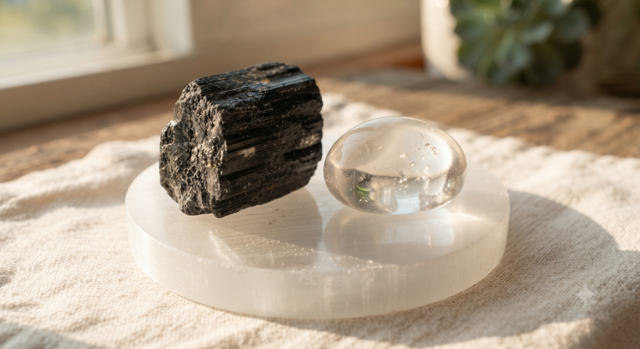 Natural stone · lab-checked
Ghar ki Potli : for a home
The bundle Dadi pressed into your hands when you moved into a new place.
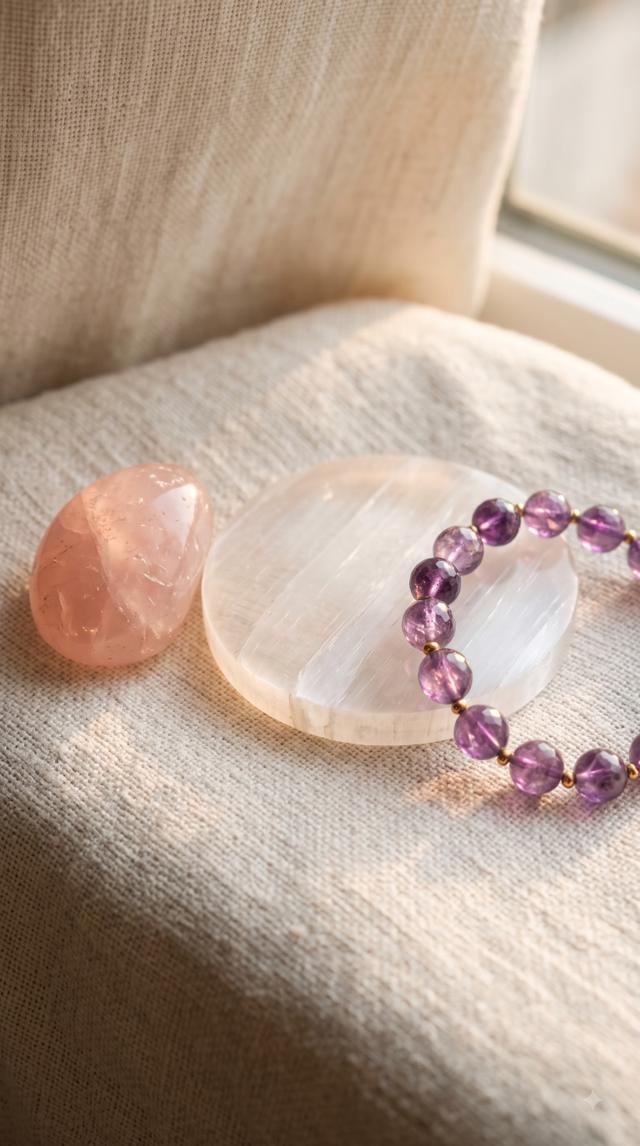 Natural stone · lab-checked
Mann ki Potli : for a restless mind
The one Dadi kept by the bed for a head that would not quiet down.
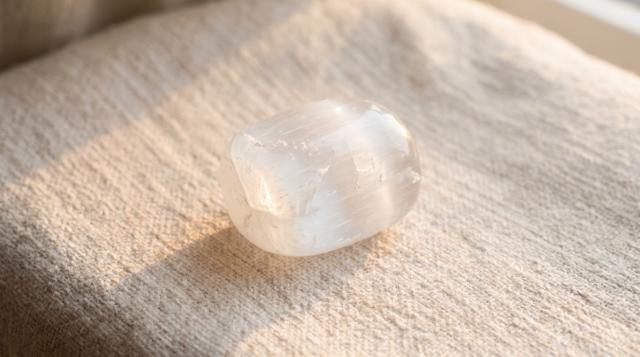 Natural stone · lab-checked
Selenite Tumbled Stone
A little piece of selenite, pale and pearly like a sliver of moon, striped with fine fibres that catch the light like satin.
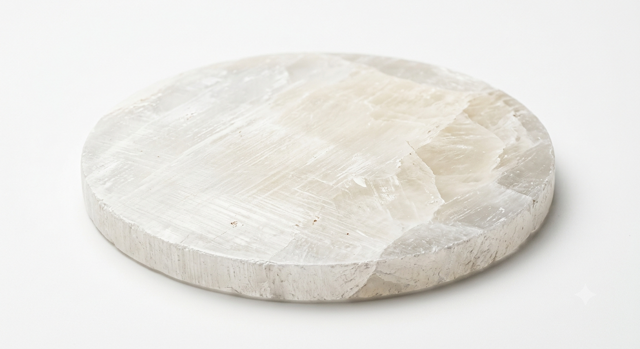 Natural stone · lab-checked
Selenite Charging Plate
A hand-cut selenite charging plate, pale and softly grooved, light for its size.
 Natural stone · lab-checked
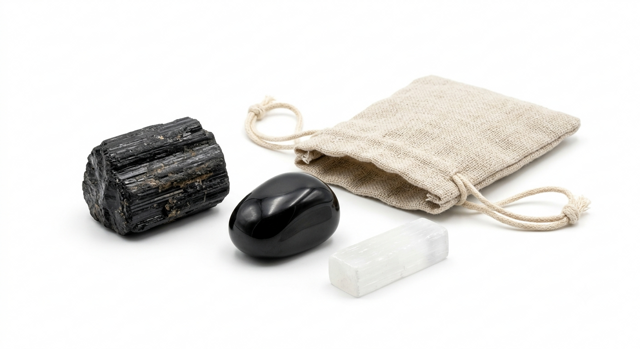
Protection Kit
Black tourmaline, black obsidian and selenite in one pouch, with a card on how to use them.
 Natural stone · lab-checked
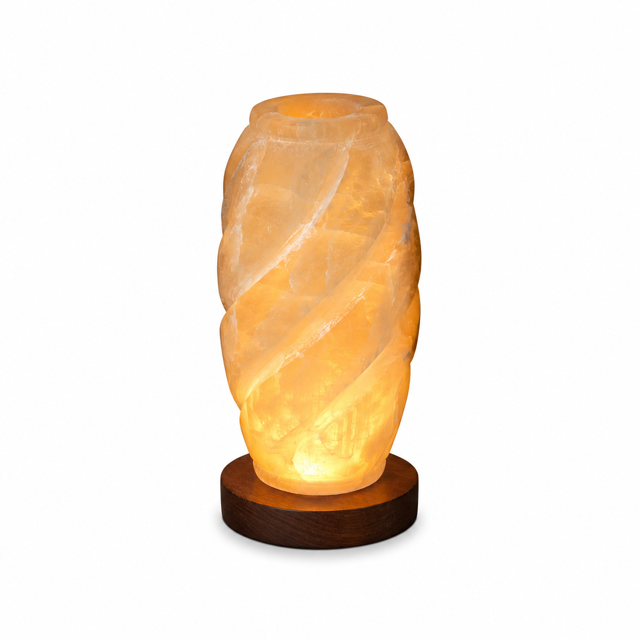
Selenite Lamp
A carved selenite lamp that glows warm amber from within, every vein and ripple in the stone lighting up when it is switched on.